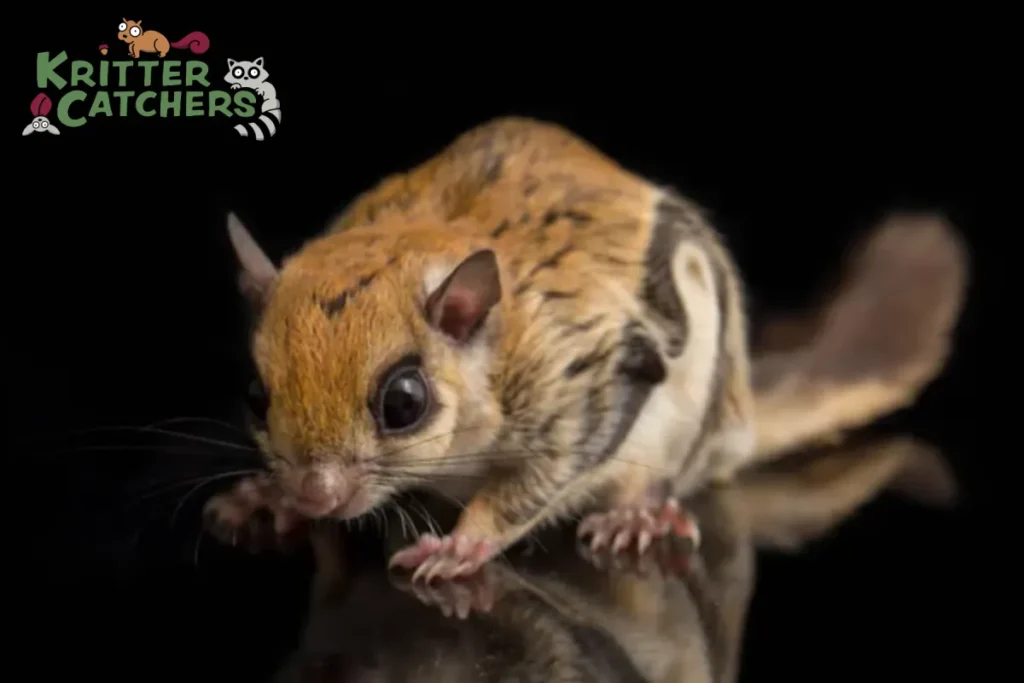
To identify flying squirrel entry points, you must inspect for gaps as small as a quarter-inch in diameter, typically located along high rooflines, ridge vents, and soffits. Because these rodents have collapsible rib cages and a small skeletal frame, they can fit through any opening that accommodates their skulls, roughly the size of a quarter. Successful identification involves looking for brownish “sebum” oil stains and tiny gnaw marks around these seemingly insignificant architectural gaps.
Comparison: Flying Squirrel Entry Habits vs. Other Rodents
Flying squirrels are frequently misidentified because homeowners mistake them for gray squirrels, which leave large, jagged holes. However, flying squirrels are masters of the “micro-entry.” They exploit existing construction gaps rather than creating new ones, making Verona wildlife control a task of extreme technical precision.
Entry Point Profiles by Species
| Species | Minimum Entry Diameter | Common Entry Height | Primary Sign of Entry |
| Flying Squirrel | 1/4″ to 1/2″ | 15+ Feet (Roofline) | Rub marks / Sebum staining |
| Grey Squirrel | 1.5″ to 2.” | Variable (Trees/Roof) | Large, jagged gnaw marks |
| House Mouse | 1/4″ | Ground Level / Foundation | Droppings / Gnawed wood |
| Rat | 1/2″ to 3/4″ | Low to Mid-Level | Greasy “rub” marks / Large holes |
4 Steps to Mapping Entry Points Using the ‘Quarter-Inch’ Rule
Finding a quarter-inch hole in a multi-story home requires a systematic approach. Most flying squirrel removal failures occur because a single micro-gap was overlooked during the initial walk-through.
- Vertical Inspection: Focus your search on the highest points of the home. Unlike ground rodents, flying squirrels glide from tree canopies, landing on eaves, dormers, and chimney shoulders.
- The “Grease Mark” Search: Look for dark, brownish-grey staining around tiny gaps. This is “sebum,” or body oil, left behind as the squirrel’s fur repeatedly brushes against the edge of a tight space.
- Corner and Intersection Audit: Pay close attention to where two structural elements meet, such as where the fascia board meets the shingles or where a dormer wall hits the roofline.
- Airflow Detection: On cold days, warm air escaping through tiny cracks in your attic’s “envelope” acts as a beacon for squirrels seeking warmth.
Our Multi-Phase Approach to Flying Squirrel Resolution
At Kritter Catchers NJ, we believe that true wildlife management is an art backed by science. We are a licensed and insured team that prides itself on being a trusted partner to our community, providing the most precise Verona wildlife removal for homeowners seeking a permanent solution. Our proprietary process ensures your home is restored to a secure, pest-free state using a highly personalized methodology tailored to your property’s specific vulnerabilities.
1. Professional Inspection and Expertise
Every project begins with a comprehensive inspection. Our team utilizes decades of experience and expertise to think like the animal. We don’t just look for where they are now; we identify where they might go next. During a recent audit for a client, we identified several “latent” entry points along the roof return that had not yet been breached but were inevitable targets for the colony.
2. Humane Trapping and Exclusion
We lead with a humane approach. If animals are currently nesting, we utilize humane trapping or our patented Wildlife Exclusion Tunnel. This tunnel is a unique innovation that allows squirrels to exit your home to forage but prevents them from mechanically re-entering. This ensures that the animals are removed safely without being trapped in the walls or separated from their young.
3. Sealing Entry Points
Once the home is vacated, we focus on sealing entry points with industrial-grade materials. Following the quarter-inch rule, we reinforce every gap with specialized metal hardware cloth and weather-resistant sealants that flying squirrels cannot chew through. This step is the backbone of permanent wildlife removal in Verona, NJ.
4. Clean-Up and Sanitization
Flying squirrels are social creatures that nest in large colonies, resulting in significant waste accumulation. Our clean-up and sanitization service involves removing contaminated insulation and neutralizing pheromones. By destroying the “scent trail,” we prevent future squirrels from being attracted to your attic.
5. Preventive Measures
Finally, we implement preventive measures. This includes trimming overhanging branches that serve as “launch pads” and providing a long-term warranty on our work. This commitment to customer satisfaction ensures that once we solve your problem, it stays solved.
Debunking the “They Need a Big Hole” Myth
A common industry myth is that if you don’t see a visible, chewed hole the size of a golf ball, you don’t have a squirrel problem. In reality, flying squirrels rarely create a hole from scratch; they exploit “builder’s gaps,” small openings left during construction for ventilation or where materials didn’t perfectly align. Because their rib cages are flexible, a gap the width of a standard pinky finger is often enough for a colony of twenty squirrels to enter. If you wait for large-scale damage to appear, you are likely already dealing with a massive infestation.
Key Features of Flying Squirrel Micro-Entries
- Roof-to-Wall Intersections: The most common entry point where the roofline meets the siding.
- Ridge Vents: If the plastic caps are loose or the mesh is missing, squirrels can enter through the very top of the roof.
- Gutter Lines: Squirrels often enter through the “builder’s gap” behind the fascia board.
- Sebum Rings: A tell-tale dark ring of oil around a hole is a 100% confirmation of active wildlife use.
People Also Ask (FAQ)
How can a squirrel fit through a 1/4-inch gap?
Flying squirrels have extremely flexible skeletons. If their skull (the widest part of their body) can fit through an opening, they can flatten their ribs and glide “sails” (patagia) to squeeze the rest of their body through.
Why is wildlife removal specifically focused on rooflines?
Because flying squirrels are nocturnal gliders, they travel from tree to tree and land on the highest points of your home, making roofline exclusion the most effective strategy for wildlife control.
Is flying squirrel removal different from gray squirrel removal?
Yes. Gray squirrels are diurnal and usually solitary. Flying squirrels are nocturnal and highly colonial. A single home can easily host 15 to 30 flying squirrels, requiring a much more comprehensive sealing strategy.
Partner with the Experts at Kritter Catchers NJ
Dealing with a wildlife invasion is overwhelming. At Kritter Catchers NJ, we want you to feel reassured and at ease. Our brand is built on being a professional, approachable, and community-oriented partner. When you work with our licensed and insured team, you aren’t just getting a service; you’re getting a permanent solution backed by our innovative, patented Wildlife Exclusion Tunnel.
We serve homeowners throughout our service areas, ensuring that every client feels confident and secure in their home. If you suspect that “micro-entries” are allowing pests into your attic, don’t wait for the damage to spread. Contact us for more information.