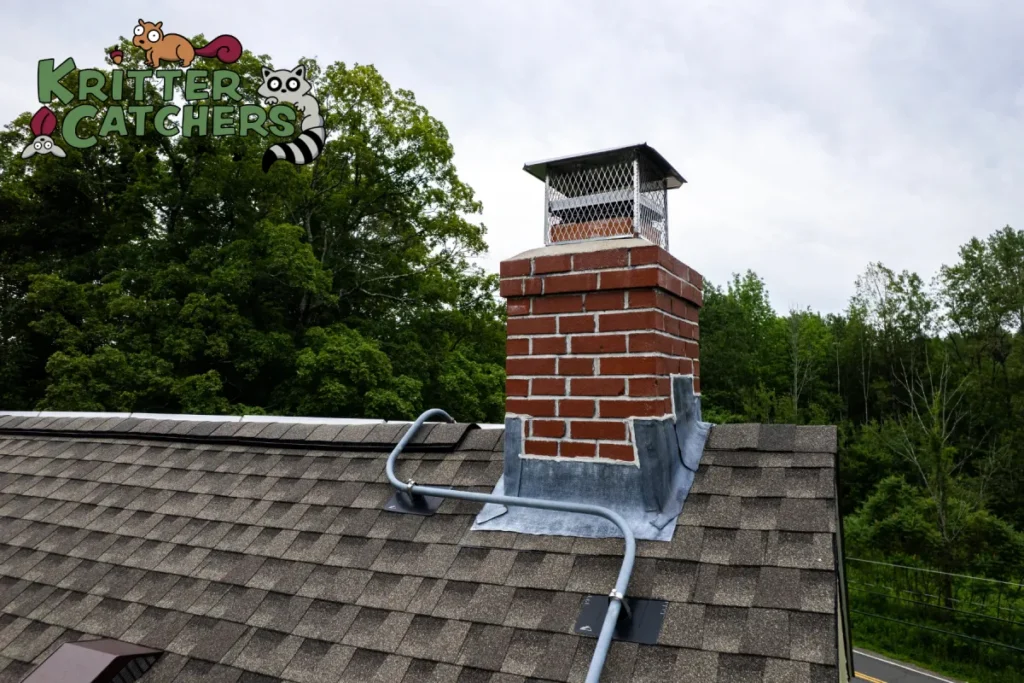
In North Jersey, the cost of chimney cap replacement depends on the type of cap, the size and configuration of the chimney, and how accessible the roof is. Multi-flue caps are typically custom-fit to cover the chimney crown, while single-flue caps are generally more straightforward to install. Factors such as chimney height, roof pitch, and whether special access equipment is needed can also affect the overall scope of the job.
The part most quotes leave out: a cap that keeps rain out will not necessarily keep a raccoon out. That comes down to the mesh, and it is the first thing we check during chimney cap installation.
Why we look at the flue before we quote a cap
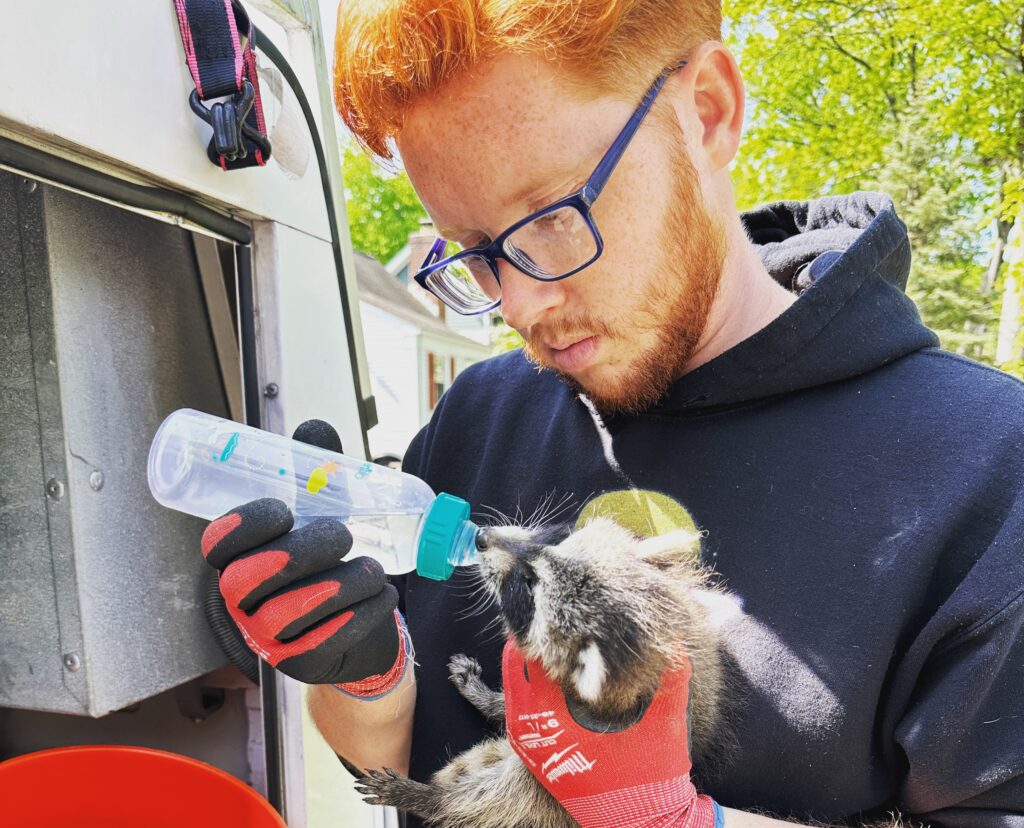
Most of the chimney calls we get are not really about chimneys. Somebody hears scratching, or smells something, and when we get on the roof, the cap is either gone, crushed, or was never there. An open flue is one of the easiest ways into a North Jersey house, and raccoons in particular treat a masonry chimney like a hollow tree. It is dark, it is dry, and the shelf above the damper is a good place to have kits.
So we do not price a cap off a photo. We get up there, measure the flue, look at the crown for cracks, and check whether anything is living in it right now. Critter control in Montclair, NJ should always include checking for active wildlife before any chimney work begins. Capping a chimney with an animal still inside is how you end up with a dead raccoon behind your firebox and a much bigger bill. We have been called out to fix exactly that more than once.
What actually moves the price
Five things, roughly in order of how much they matter.
- Flue count. One flue is one cap. Two or three flues, or a big crown you want covered in one piece, means a custom multi-flue cap and a higher number.
- Material. Galvanised steel is the cheap option, and it is exactly that. Stainless lasts. Copper costs the most and mostly buys you looks. On older Nutley and Belleville housing stock, we push stainless, because galvanised caps in this climate rust through and we end up back on the same roof.
- Access. A walkable pitch on a ranch is one job. A steep slate roof on a Glen Ridge Victorian with a chimney at the ridge is a different job, and staging costs money.
- Crown condition. If the concrete crown under the cap is cracked, a new cap sits on a bad foundation. Sometimes we can seal it. Sometimes it needs rebuilding, and that is masonry work, not ours.
- Whether something is living in there. If there is an animal in the flue, the removal happens first, and the cap goes on after.
The mesh is the whole point
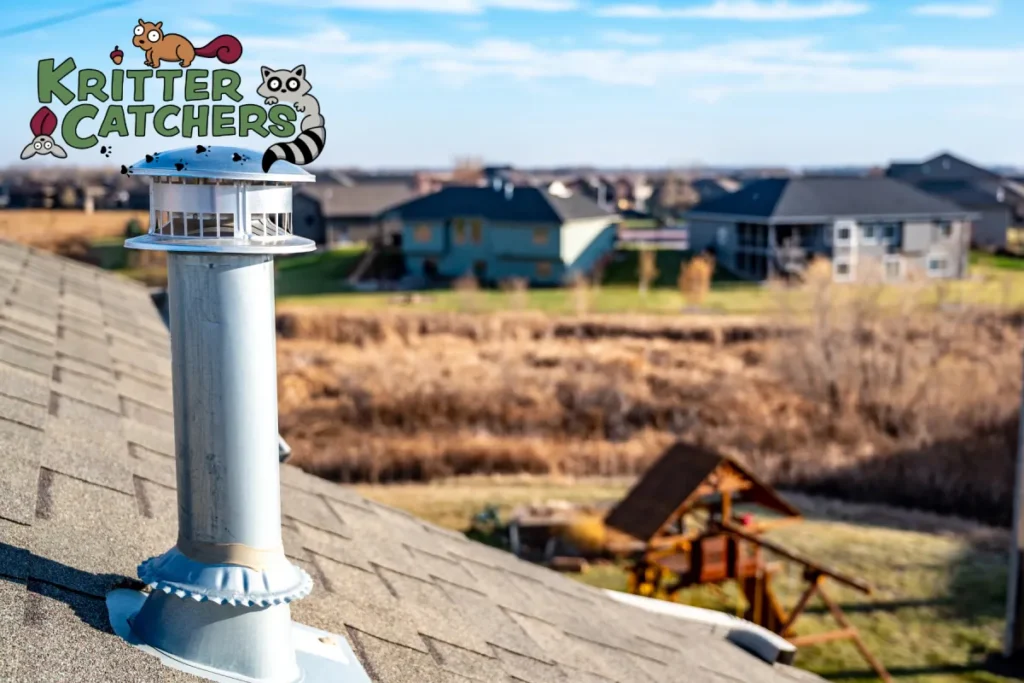
Here is the thing nobody selling you a cap online will tell you. A lot of stock caps use a wide mesh that is fine for embers and rain and useless against wildlife. A grown raccoon can get through a gap it can fit its skull into, and a young grey squirrel needs less than most people would guess.
We spec quarter-inch galvanised hardware cloth for exclusion work generally, and we look for the same standard on a cap. If a cap has a coarse screen, it is a rain cover, not an exclusion device. That distinction is the difference between paying once and paying twice, and it is why we would rather sell you the right cap than the cheap one.
Worth saying plainly: we are not a masonry company. If your chimney needs repointing or a new crown, we will tell you so, and you will want a mason. Montclair critter control focuses on capping flues to keep animals out. That is the job.
Can I just replace the chimney cap myself?
You can. Whether you should depends on the roof more than the cap. On a low ranch with a bolt-on single-flue cap and a ladder you are comfortable on, it is a real DIY job. On anything steep, high, or slate, the cap is cheap, and a fall is not.
The mistake we see most often with DIY caps is sizing. People measure the outside of the flue tile instead of the inside, or they buy a slip-in cap for a flue that needs a bolt-on. Then it either does not seat, or it lifts off in a nor’easter, and you are back where you started, usually in February.
How often does a chimney cap need replacing?
A decent stainless cap should outlast most of us. Galvanised is where the timeline gets short, and in North Jersey, with the freeze and thaw we get, we regularly pull galvanised caps that have rusted through in under a decade.
Check yours after any serious wind event, and check it in autumn before the squirrels start looking for somewhere to overwinter. If you can see daylight through a corner from the ground with binoculars, something else can see a way in. If you spot signs of an animal getting inside, wildlife removal in Montclair, NJ can help address the problem before it becomes more serious.
Is chimney cap work covered by homeowners insurance?
Usually not the cap itself, because a worn-out cap is maintenance. Damage caused by the animal that got in through the missing cap is a different conversation, and that one is sometimes covered. We wrote a separate piece on what an adjuster actually asks us for.
Questions we get asked
Can I replace my own chimney cap?
Yes, on a low, walkable roof with a standard bolt-on single-flue cap. The two things that catch people out are measuring the flue on the outside instead of the inside, and underestimating the roof. If it is steep or slate, pay someone.
How often does a chimney cap need to be replaced?
A good stainless cap can last decades. Galvanised caps in North Jersey often rust through in well under ten years because of our freeze and thaw cycle. Check after big wind, and check every autumn.
Is chimney repair covered by homeowners insurance?
A worn cap is normally treated as maintenance and is not covered. Damage caused by an animal that entered through the gap can be a different matter depending on your policy.
Will a chimney cap stop raccoons and squirrels?
Only if the mesh is tight enough. Plenty of stock caps are built for rain and embers, with a screen wide enough for a raccoon to work through. We look for quarter-inch mesh.
Do you cap the chimney if something is living in it?
No. We get the animal out first, and between roughly February and September we check for young before anything is sealed. Capping a flue with kits inside is how you get a dead animal in the chase.
About Kritter Catchers NJ
Kritter Catchers NJ provides professional, humane wildlife control and exclusion services designed to protect homes and businesses across New Jersey. With personalized solutions, transparent service, and a focus on lasting results, the team helps customers feel confident that their property and wildlife concerns are handled responsibly.
Get a free quote. We will get on the roof and measure before we give you a number.